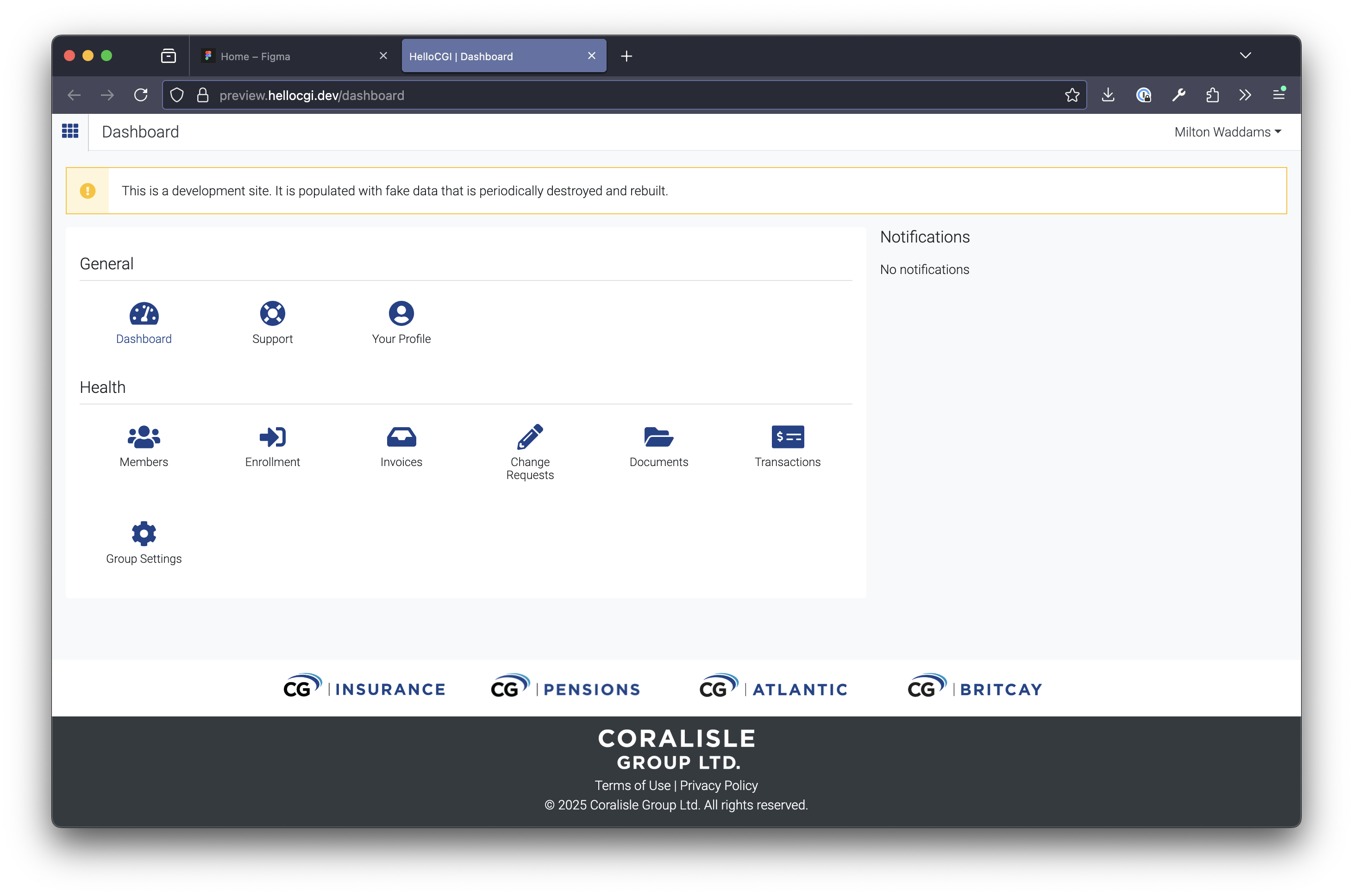
MFA Rollout — June 2025
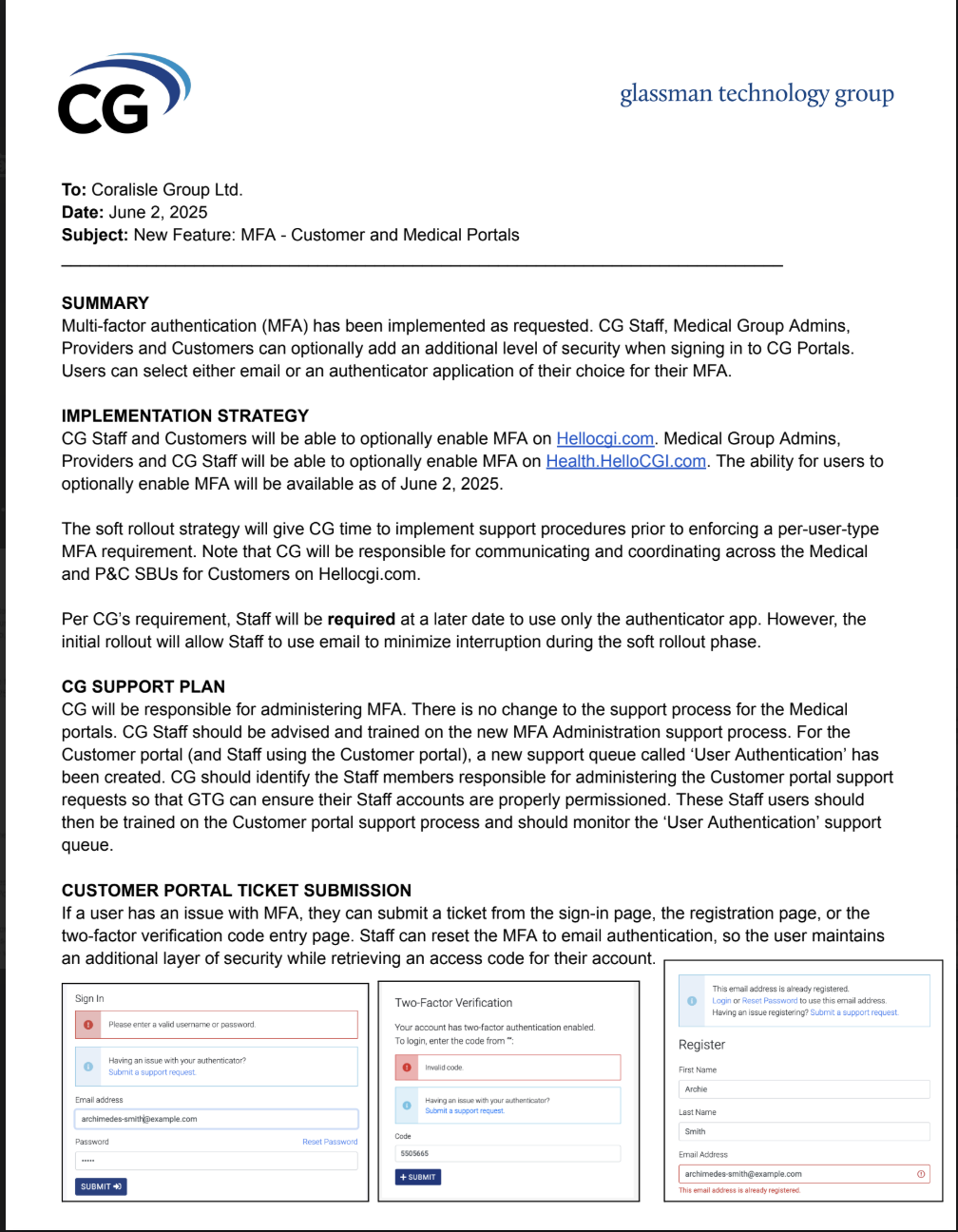
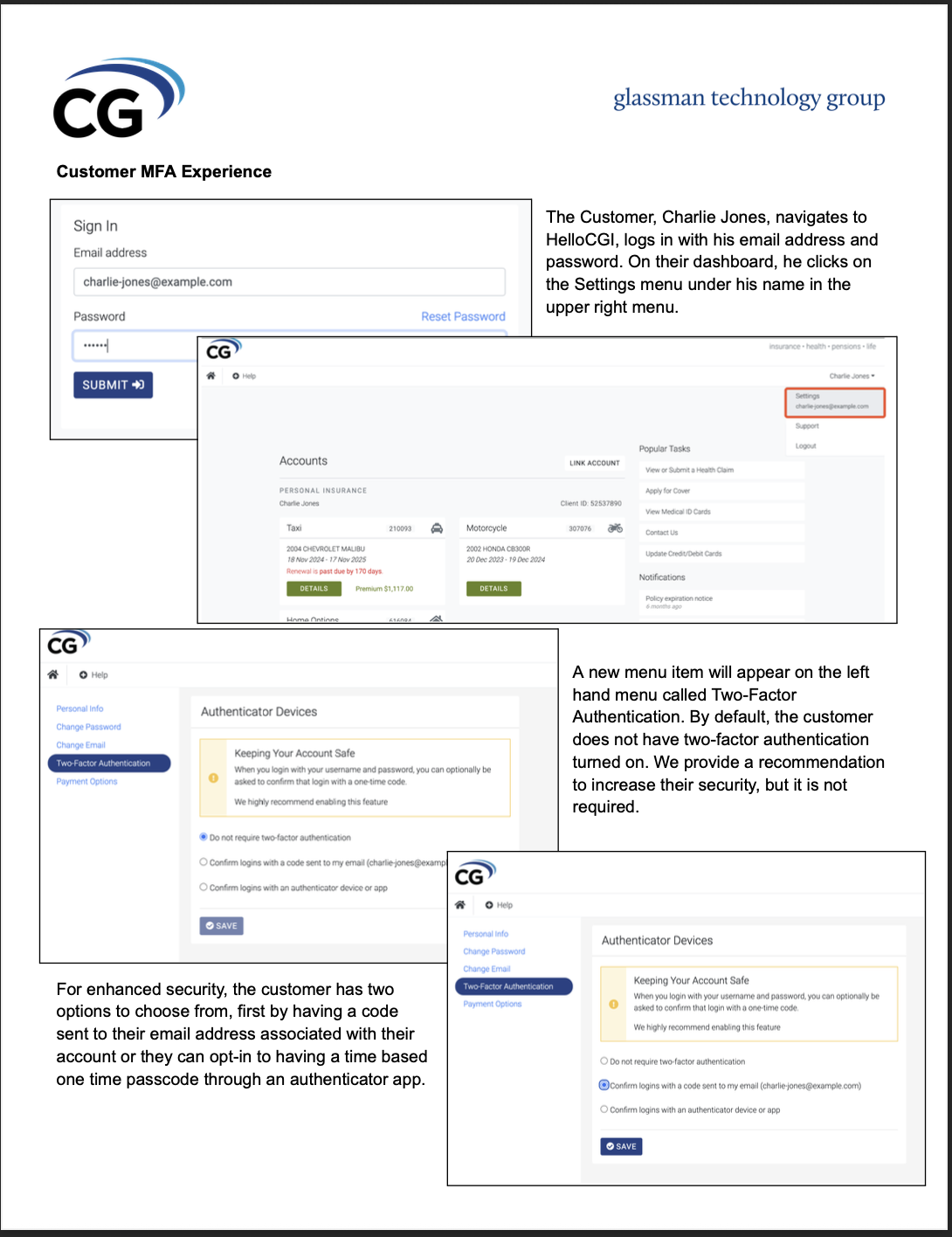
At the direction of the Chief Information Security Officer, I led a comprehensive multi-factor authentication initiative across all CG portal environments. The existing single-factor authentication left sensitive healthcare and insurance accounts vulnerable — and with multiple user types spanning two platforms, the solution needed to be flexible, scalable, and supported by a robust administrative system from day one.
The Challenge
The CG portals served a wide range of users with varying levels of technical comfort — from CG Staff managing sensitive financial data to Customers simply checking their insurance policies. A one-size-fits-all MFA approach wouldn't work. The solution needed to accommodate voluntary adoption initially, scale to mandatory enforcement for specific user groups, and include a support system so that authentication issues wouldn't lock users out of critical systems.
Scope & Design
I designed the complete MFA experience spanning both HelloCGI.com and Health.HelloCGI.com, covering every user type in each environment.
My Role
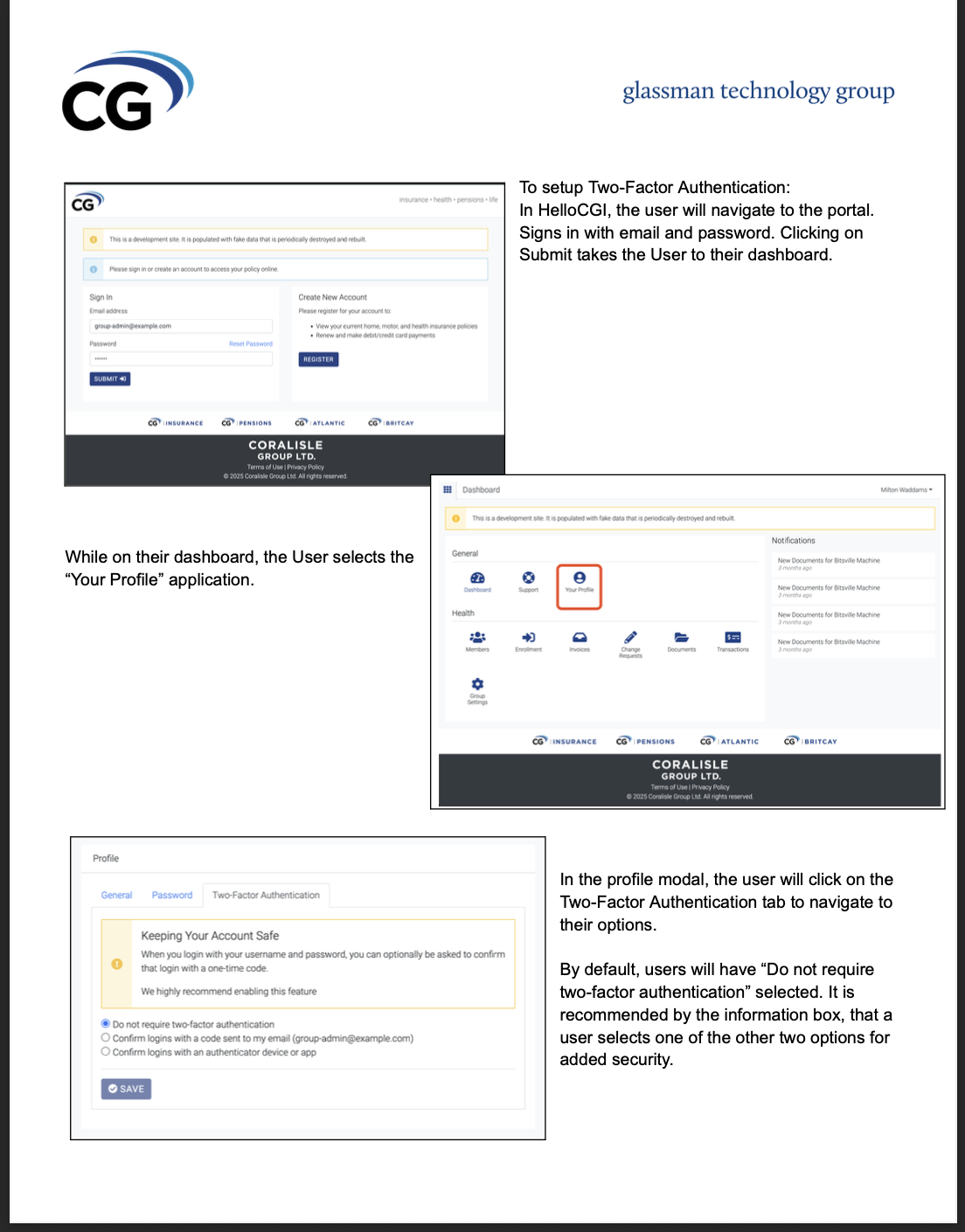
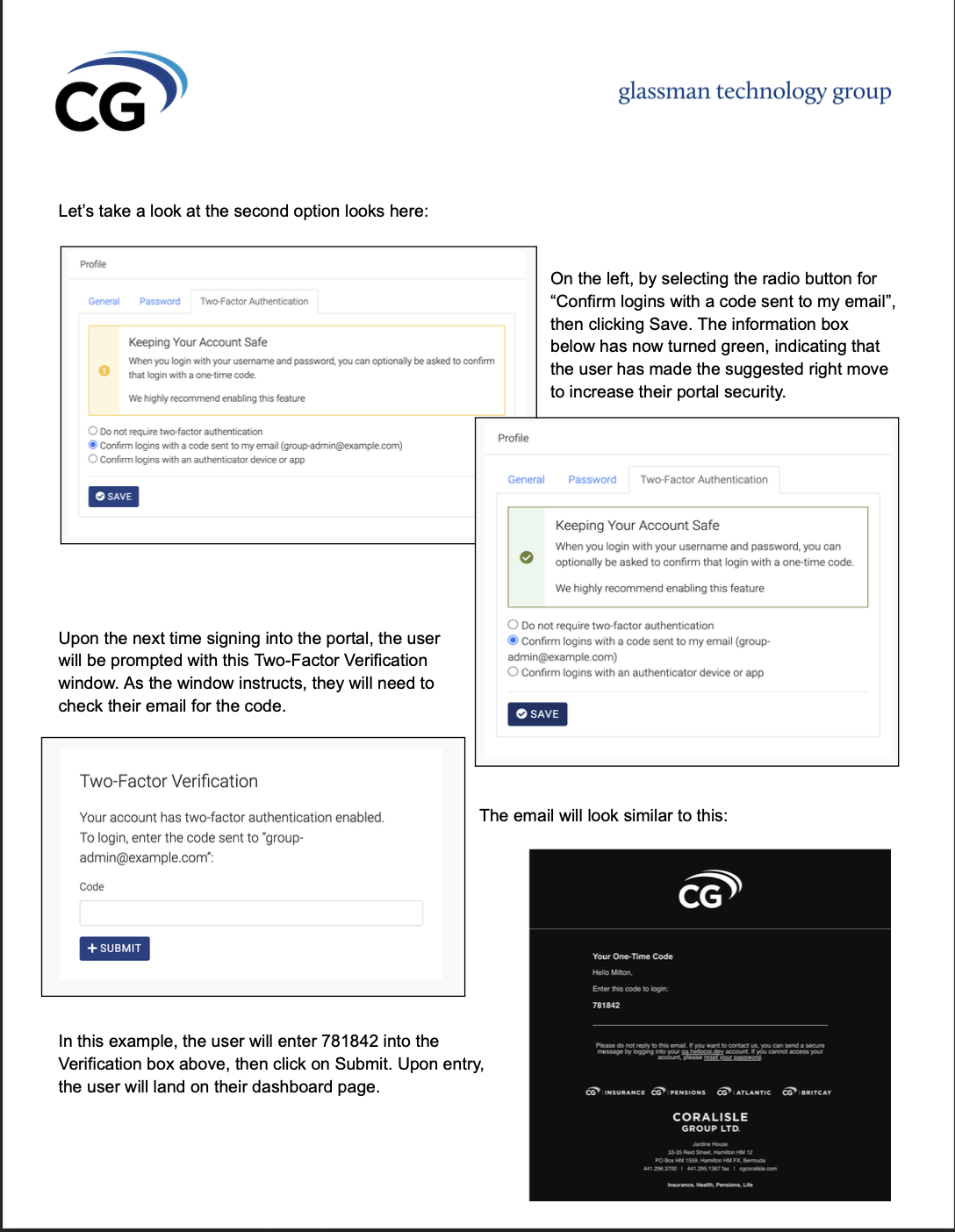
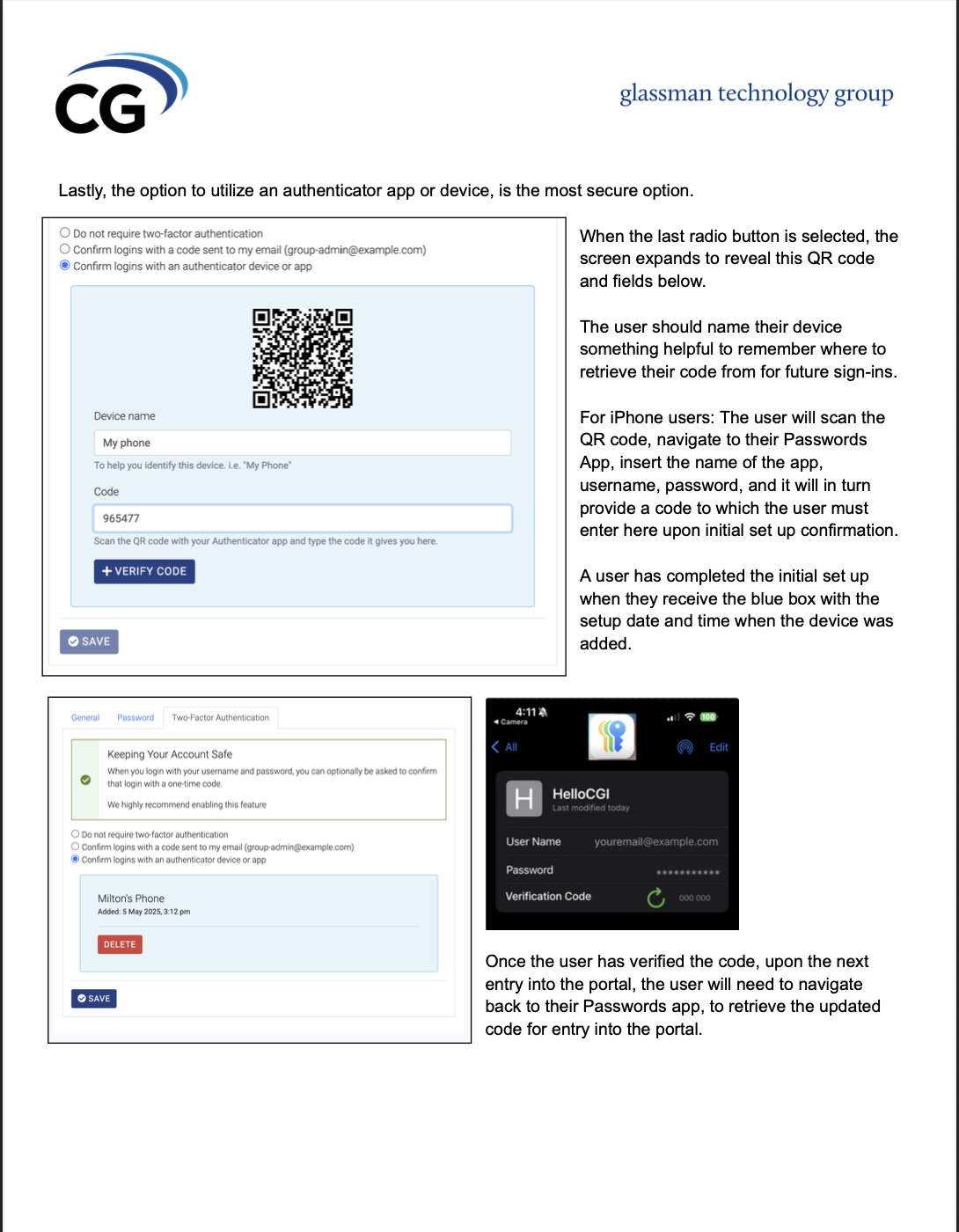
Once MFA and TOTP were built out by the lead technical architect and ready for testing in early June, I conducted end-to-end testing across all scenarios: setting up MFA with different authenticator apps, testing email verification flows, validating the administrative reset process, and ensuring a consistent experience across both portal environments.
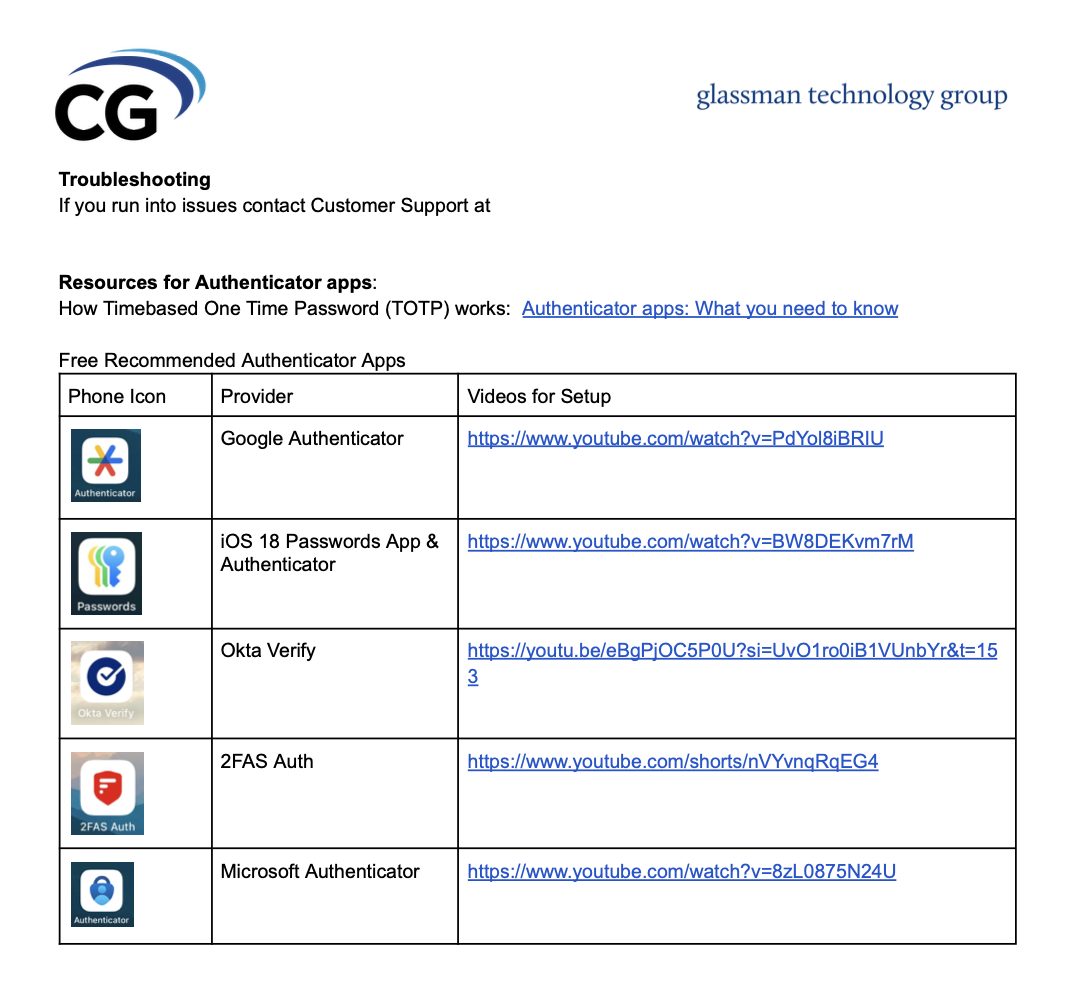
From there I created the full suite of release documentation — end-user setup guides for Customers, Staff, and Group Admins; an administrative reset guide for CG Staff managing support requests; and a troubleshooting guide with links to recommended authenticator apps and instructional videos to help users choose the right security level for their needs.
Post go-live, I met with the CISO to walk through the documentation package and ensure he had everything needed to distribute to his designated pilot teams. CG managed the rollout strategy internally, prioritizing their financial teams first. I made myself available should any specific team need hands-on assistance during their onboarding.
Once MFA was fully live as optional in June, the architecture was in place to enforce it as mandatory for specific user groups — but that requirement had not been implemented as of my departure from the organization.
Customer Support & Self-Service Research — Aug/Sep 2025
What began as two separate initiatives — a Customer Knowledge Center (CKC) and a Customer Support platform evaluation — ultimately became one. Early in the research process, I recognized that the right customer support platform could handle both needs simultaneously: a ticketing and support system for inbound requests, and a self-service knowledge base for users to find answers independently. Rather than build a separate CKC solution, I folded those requirements into the vendor evaluation criteria, effectively collapsing two initiatives into one well-scoped research effort.
Business Problem
GTG's single customer service representative was managing an estimated 1,000+ monthly support tickets — a volume that was unsustainable without tooling to help triage, route, and resolve requests efficiently. Without a centralized intake system, support requests arrived through whichever channel was most convenient for the requester — direct email, existing support queues, Teams, or Slack — making it nearly impossible to track, prioritize, or report on workload. There was no centralized system to track, prioritize, or report on support activity. As ClaimExchange.io prepared for launch and HelloCGI.com continued to grow, the need for an integrated, scalable support solution became critical. The platform needed to embed seamlessly within the portal environments, integrate with Linear (the engineering team's project management system), and serve as the foundation for a customer-facing self-service knowledge base — reducing inbound ticket volume at the source.
Phase 1 — Customer Support Requirements & CKC Foundation
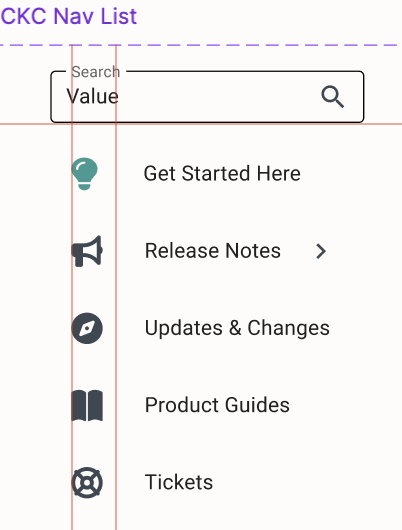
I began by developing a comprehensive requirements document covering all functional and technical needs. In parallel, I started designing a Customer Knowledge Center — building initial wireframes and low-fidelity designs to explore what a self-service layer would look like within the portal environments. As the vendor research progressed, it became clear that modern support platforms included robust knowledge base capabilities natively. The CKC wireframe work directly informed the self-service requirements I added to the evaluation criteria, ensuring vendors were assessed on their ability to deliver that experience out of the box.
AI bot with intent recognition, ticketing system, knowledge base with search, template response system, email integration and routing, mobile responsive design.
SSO integration, MFA support, role-based access control (RBAC), data encryption at rest and in transit — critical given the sensitive nature of healthcare and insurance data.
CEIO portal embedding via widget or iframe, API-first architecture, white-label and custom branding options, SSO and session management across domains, development SDKs.
Advanced analytics dashboard, workflow automation and triggers, SLA management and escalations, CSAT/NPS tracking, Linear integration for engineering escalation workflows.
Phase 2 — Vendor Research
I conducted initial research across five leading customer support platforms, evaluating each against the requirements framework. I reached out to all five vendors directly — responses varied, with most requiring trial sign-ups before engaging in any substantive conversation. Since the platform wasn't ready for implementation, committing to a trial wasn't the right move, so I built the evaluation framework from published documentation, feature comparisons, and available product information.
Phase 3 — C&E Matrix Evaluation Framework
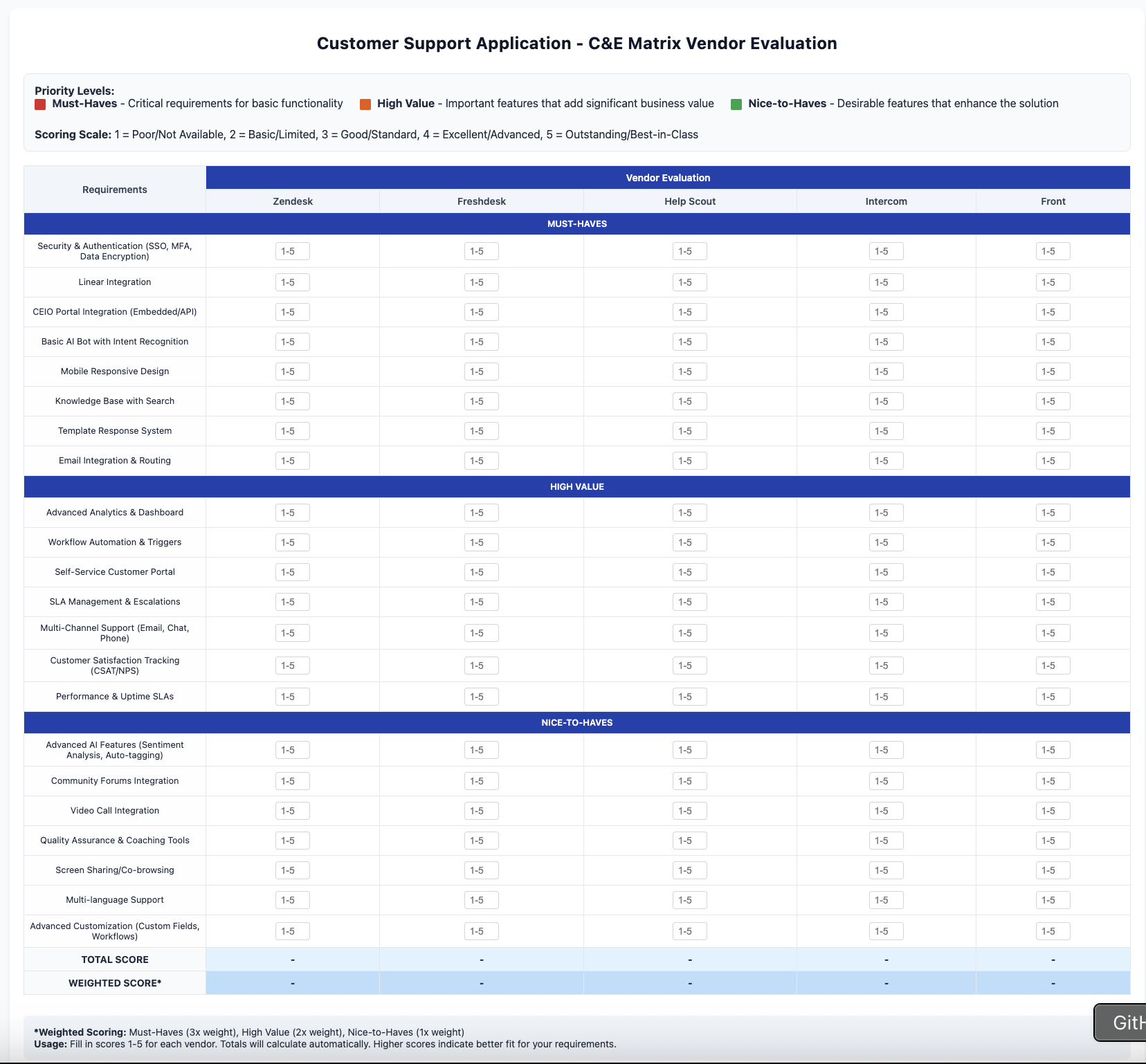
To facilitate objective, stakeholder-driven comparison, I built a weighted Cause & Effect (C&E) Matrix — a Six Sigma tool that prioritizes evaluation criteria based on business output priorities. The matrix was designed to be completed collaboratively by key team members, ensuring the final vendor decision would reflect measured input from across the organization rather than a single perspective.
- Security & authentication (SSO, MFA, encryption)
- Linear integration
- CEIO portal integration (embedded/API)
- Basic AI bot with intent recognition
- Mobile responsive design
- Knowledge base with search
- Template response system
- Email integration & routing
- Advanced analytics & dashboard
- Workflow automation & triggers
- Self-service customer portal
- SLA management & escalations
- Multi-channel support
- CSAT/NPS tracking
- Advanced AI features
- Community forums
- Video integration
- QA tools
- Screen sharing
- Multi-language support
The matrix covered 21 evaluation criteria across all three tiers, with weighted scoring (1–5 scale) enabling side-by-side vendor comparison that accounted for business priority. Based on my initial research, Intercom emerged as the strongest candidate — particularly for its AI-first approach, portal embedding capabilities, and knowledge base features that aligned with the CKC requirements. The completed matrix, along with the full requirements document and vendor comparison, was handed off to the team as the foundation for a final, stakeholder-driven selection decision.
Challenges
Designing a security feature that worked equally well for tech-savvy CG Staff and less technically experienced Customers required careful UX thinking. A single implementation wouldn't serve both groups — the solution needed tiered options, clear guidance, and a safety net in the form of an administrative reset process that maintained security while restoring access.
Most vendors required trial sign-ups before engaging in substantive conversations about integration capabilities and pricing. Since the platform wasn't ready for implementation, committing to a trial would have been premature. The evaluation framework had to be built primarily from published documentation and feature comparisons, which is precisely why the C&E Matrix approach — designed for team completion rather than individual judgment — was the right methodology for this context.
The CKC and customer support platform work began as separate initiatives. Recognizing mid-research that the right vendor would handle both needs eliminated redundant work — but required restructuring the requirements document to ensure the self-service and knowledge base criteria were as well-specified as the support ticketing requirements. The CKC wireframe work wasn't wasted; it became the design foundation for the knowledge base requirements.